
Every spring the seed catalogues make the same quiet promises. Plant basil beside your tomatoes and aphids will stay away. Ring your carrots with onions and the root fly will lose the scent. Marigolds, the charts say, will clean up nematodes, whitefly and just about anything else that crawls. Companion planting is one of the oldest ideas in vegetable growing, and one of the most appealing, because it costs almost nothing and feels like working with nature rather than against it.
The problem is that a good deal of what gets passed around as companion-planting fact started life as folklore, copied from book to book and now from website to website, with the same confident charts and very little underneath them. Some combinations do earn their place in a real garden. Others are harmless but pointless. A few can even make things worse. What follows is an attempt to sort one from the other, using what actually holds up when you watch plants grow.
Why the evidence is thinner than the charts suggest
Most serious research on plant combinations comes from commercial agriculture, where crops are grown in huge blocks and the question is whether intercropping reduces pesticide use. That is not your garden. A result from a field of cabbages in another climate tells you something interesting, but it does not tell you what will happen in a raised bed beside a hedge.
Many trials also measure the wrong thing. Counting how many aphids land on a plant is not the same as measuring how much damage the plant suffers, and neither is the same as how much you harvest. A cabbage can carry a crowd of aphids and still heart up perfectly well if the predators arrive in time.
Add the variables that make gardens gardens, spacing, soil, cultivar, sowing date, the particular species of pest in your area, and the honest position is this: companion planting works sometimes, in some places, for some pests. That is not a reason to ignore it. It is a reason to use it as one layer of a plan rather than as a substitute for one.
Three mechanisms that genuinely do something
Masking the scent of the crop
Many pests find their host plants by smell. Carrot fly, cabbage root fly and onion fly all orient towards the volatile chemicals a crop releases. If you fill the air around that crop with other strong scents, you can make the target harder to locate. This is the thinking behind carrots and onions, and there is decent support for the general principle, with a catch that the charts usually leave out: the interfering plants need to be genuinely mixed through the crop, not lined up in a neat border. A single row of onions along the edge of a carrot bed releases too little scent to confuse anything. Interplant them within the rows, thickly, or don't bother.
Trap cropping
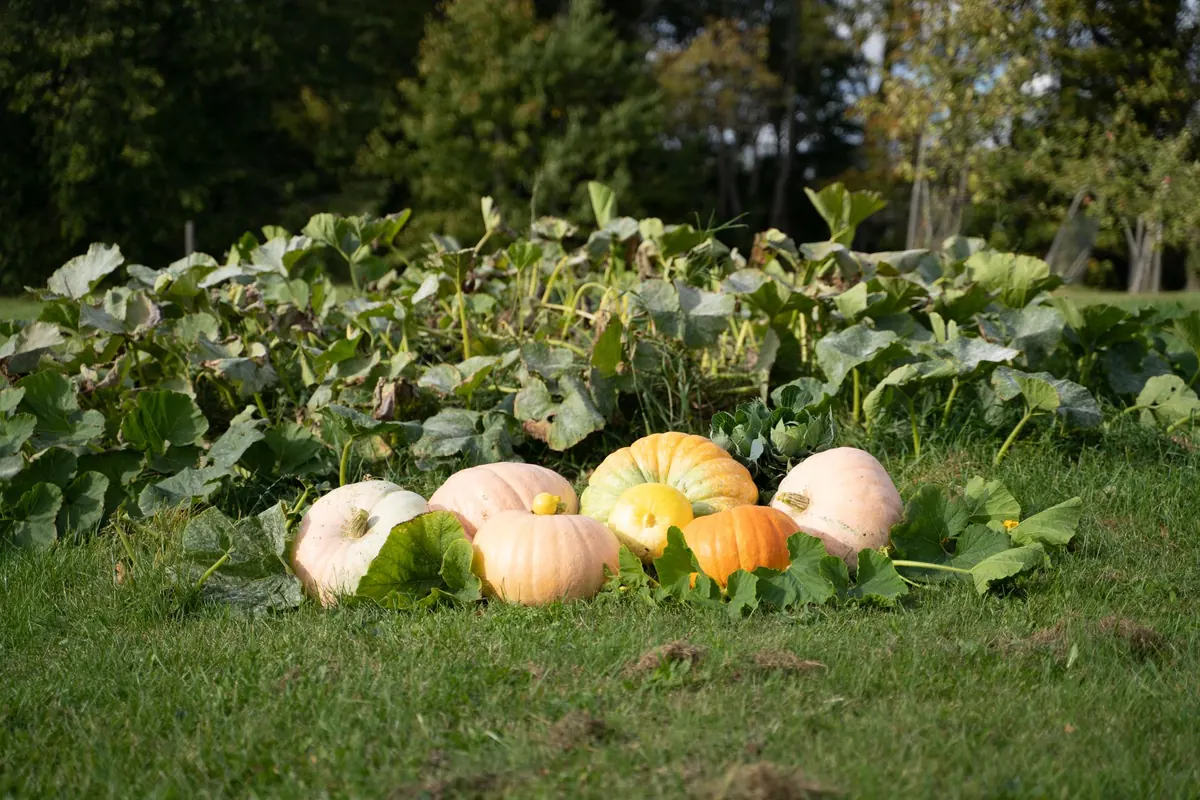
This is the most reliable of the traditional techniques and the least glamorous. You plant something the pest prefers to your crop, let it draw the attack, and then deal with the pests gathered there. Nasturtium is a well-known draw for blackfly, and a row of radish sown early will often pull flea beetles off your brassicas. Blue Hubbard squash is used this way against squash bugs in North America.
The method only works if you finish the job. A trap crop is a pest nursery on purpose, which means you must inspect it regularly and remove or destroy the infested growth before the population spills back onto the crop you were protecting. Planted and forgotten, it is a liability.
Feeding the enemies
If you want one companion-planting habit with a strong evidence base, make it this one. Adult hoverflies, lacewings, parasitic wasps and predatory beetles all need nectar and pollen at some point in their lives, and many of them need it close to where their prey lives. Small, shallow, open flowers are the ones they can actually reach.
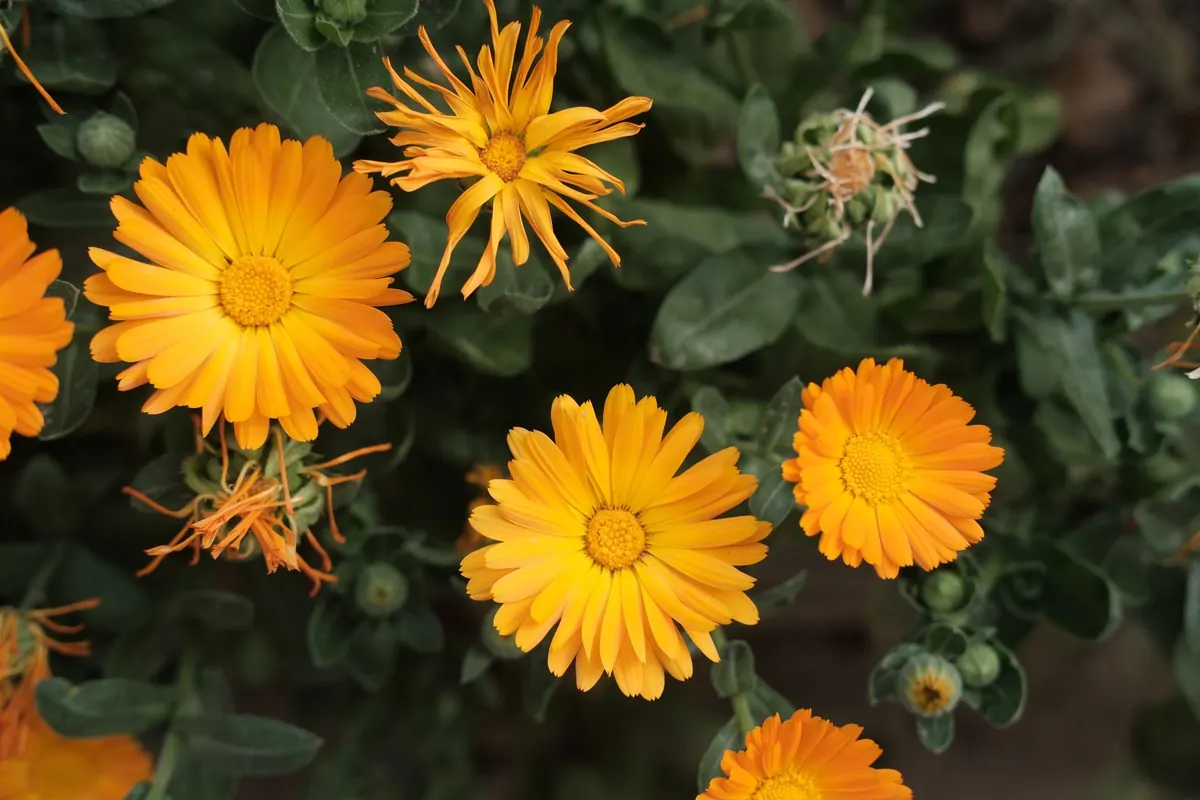
Sweet alyssum, buckwheat, phacelia, calendula, dill, coriander and fennel all do this job. Let a few of them flower rather than clearing everything to bare soil, and plant them in short strips through the vegetable beds rather than in a distant ornamental border. Insects do not commute far.
Combinations worth a place in the plot
- French marigolds (Tagetes patula) for root-knot nematodes. This is the best-documented case in the whole field. The effect comes from compounds released by the roots, and it requires growing marigolds densely as a full-season rotation crop, not dotting a few plants between tomatoes. Used that way, in a bed with a nematode problem, it can be worth a season of not growing a cash crop there.
- Alliums through carrots. Mixed results, but cheap to try if onion fly and carrot fly are a recurring nuisance. Sow or plant them close together and repeat the mixture down the whole row.
- Nasturtium beside brassicas. Useful mainly as a trap crop for aphids, and as a cheerful one. Check it twice a week.
- Radish with brassicas. A quick trap crop for flea beetles, especially sown a fortnight ahead of the main crop.
- Alyssum, phacelia and buckwheat at bed edges. The most cost-effective insectary plants for a small garden, and they double as ground cover.
- Flowering herbs left to bolt. Coriander, dill and fennel allowed to run to flower bring in parasitic wasps that hunt caterpillars and aphids.
Claims to treat with a pinch of salt
Marigolds are widely sold as an all-purpose repellent for aphids, whitefly and eelworm. Their nematode effect is real under specific conditions; the rest is largely unproven. Mint, garlic, chilli and soap sprays are sometimes filed under companion planting, but they are sprays, and their effects are short-lived and inconsistent.
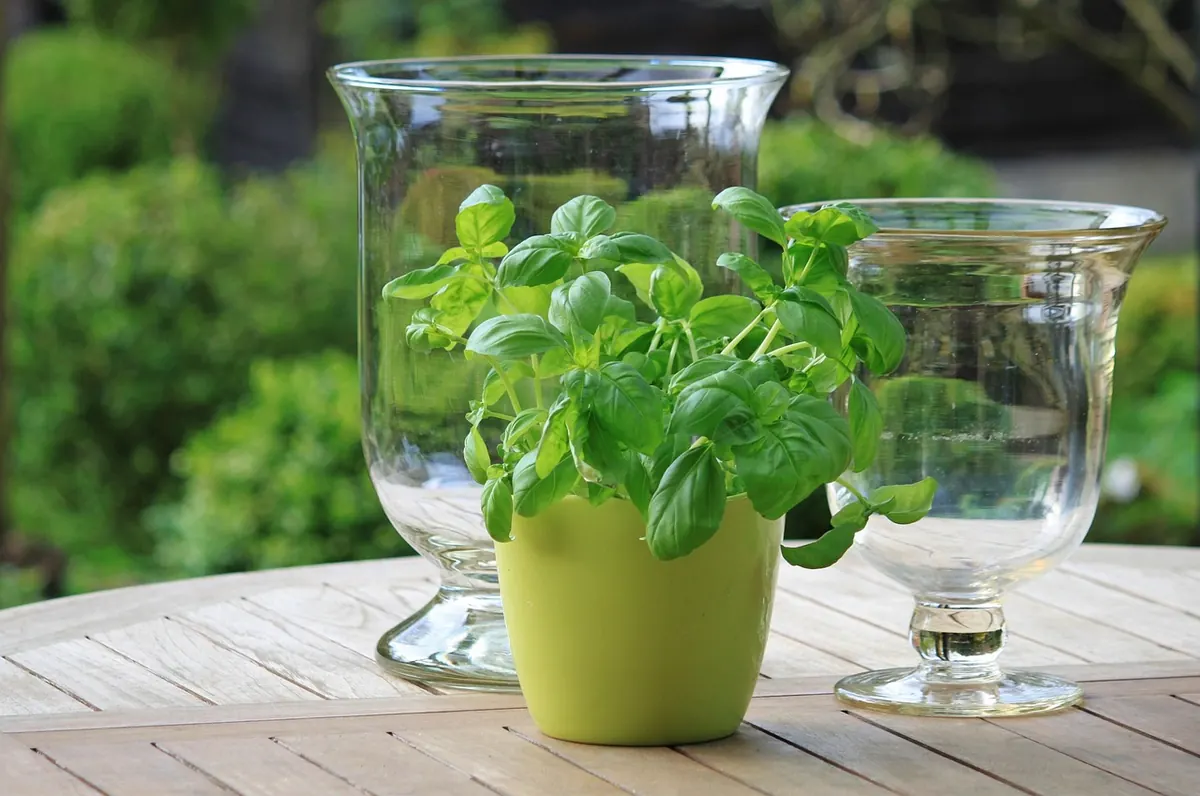
Be sceptical of any chart that lists dozens of pairings with no mention of pest species, spacing or climate. And be especially sceptical of the claim that one plant improves the flavour of another. There is no mechanism anyone has been able to demonstrate; a tomato tastes of the soil, the weather and the variety, not of the basil next door.
How to test a pairing in your own garden
The good news is that a fair trial takes one bed and a notebook. Do it properly and you will know more about your plot than any chart can tell you.
- Pick one crop and one pest. "Aphids on broad beans" is a testable question; "fewer bugs" is not.
- Split the bed in two, same variety, same sowing date, same watering. Put the companion in one half only.
- Keep the halves close enough to share weather and soil, but far enough apart that the treatments do not blur.
- Check both halves on the same day each week and write down what you see: number of infested plants, damage, predators present, eventual harvest.
- Judge on damage and yield, not just on insect counts.
- Repeat in the following season before you draw conclusions. One year is a story; two or three are a pattern.
Where this leaves your garden plan
Companion planting is a supporting act, not a headline. The things that keep pests in check most reliably are unglamorous: a rotation that stops the same family occupying the same ground, healthy soil, resistant varieties, sowing dates timed to dodge the worst of a pest's season, and a mesh cover over carrots and brassicas when pressure is high.
Build that base first. Then add the parts of companion planting that pull their weight, a strip of alyssum along the bed edge, onions threaded through the carrots, a trap row of radish you actually inspect, a block of marigolds in the corner where the nematodes got into the tomatoes last year. Keep notes. Drop whatever has not earned its space after two seasons, and keep the rest.
Treat companion planting as a series of small experiments rather than a set of rules, and it stops being folklore and starts being gardening.
Photo: Fatih Bozdemir / Pexels
Related posts
More stories you’ll love reading